A roof installation used to be simple: pick asphalt shingles, choose a color, move on. In 2026, that conversation looks completely different. Maryland homeowners are now asking about solar integration, impact-resistant materials, and energy performance ratings before a single shingle is selected. Argo Contractors US has been helping Gaithersburg homeowners navigate this shift in the roofing market. Climate change, rising energy costs, and increased insurance scrutiny have made long-term roof performance a serious financial priority for homeowners. This guide covers what every Gaithersburg homeowner needs to know in 2026.
The Roofing Installation Trends Gaithersburg Homeowners Need to Know in 2026
Gaithersburg homeowners are facing a roofing market that looks nothing like it did five or ten years ago. Materials have improved, installation standards have advanced, and the consequences of making a poor roofing decision whether that means choosing the wrong material for Maryland’s climate or hiring the wrong contractor are more financially significant than ever. Energy costs are rising, insurance companies are scrutinizing roof age and condition more aggressively, and severe weather events across the mid-Atlantic region are becoming more frequent and more intense. The roofing Installation trends shaping 2026 are a direct response to all of these pressures, and understanding them puts Gaithersburg homeowners in a stronger position to make decisions that protect both their property and their long-term investment.
Trend 1: Energy-Efficient Roofing Is Moving From Niche to Standard
Energy-efficient roofing has crossed from premium upgrade territory into mainstream expectation among informed homeowners. The reason is straightforward: a roof that actively manages heat gain and loss delivers measurable financial returns every month through reduced utility bills, and those savings compound over the 20 to 30-year life of a roofing system.
Maryland’s climate makes this particularly relevant. Gaithersburg summers bring sustained heat and high humidity, and a dark, heat-absorbing roof surface amplifies attic temperatures dramatically. Attic temperatures on a conventional dark-shingle roof during a 95°F summer day can exceed 150°F to 160°F, significantly increasing cooling demand and HVAC runtime. According to the U.S. Department of Energy, cool roofing systems can lower roof surface temperatures by up to 50°F compared to traditional materials, leading to reduced air conditioning costs. and reduced wear on HVAC equipment.
Energy-efficient roofing in 2026 encompasses several distinct technologies working together:
Reflective shingles and cool roof coatings use pigment technology and surface treatments to reflect solar radiation rather than absorbing it. These products carry Solar Reflectance Index ratings that allow homeowners to compare performance objectively across different products and manufacturers.
Improved attic insulation and air sealing work in combination with reflective roofing materials to reduce heat transfer into living spaces. A high-performance roof surface paired with inadequate attic insulation delivers only a fraction of its potential energy benefit.
Solar-ready roofing systems are increasingly being installed during roof replacements to accommodate future solar panel installation without requiring structural modification. This forward-looking approach adds minimal cost at the time of roof replacement and eliminates significant expense if solar is added later.
Attic ventilation upgrades are now considered a standard component of energy-efficient roofing installation rather than an optional add-on. Balanced intake and exhaust ventilation systems prevent heat and moisture buildup in the attic, extending shingle life and reducing the thermal load on the home’s cooling system simultaneously.
Trend 2: Metal Roofing Options in Gaithersburg, MD Are Expanding Fast
Metal roofing options in Gaithersburg, MD have evolved dramatically from the industrial standing seam panels that defined the category a decade ago. Today’s residential metal roofing products are available in profiles that convincingly replicate the appearance of traditional asphalt shingles, cedar shakes, slate tiles, and clay barrel tiles, giving homeowners access to metal’s exceptional performance characteristics without compromising on curb appeal or neighborhood architectural consistency.
The performance case for metal roofing is compelling and well-documented. Properly installed metal roofing systems carry expected service lives of 40 to 70 years, two to three times the lifespan of standard three-tab asphalt shingles. They perform exceptionally well during the heavy rain events, ice storms, high winds, and occasional hailstorms that Maryland homeowners experience across a full weather year. Metal roofing is also non-combustible, which can influence homeowners’ insurance premiums in some markets.
For Gaithersburg homeowners specifically, metal roofing’s performance in freeze-thaw conditions is a meaningful advantage. The mid-Atlantic region experiences significant temperature fluctuation in late fall and early spring, conditions that stress conventional asphalt shingles through repeated expansion and contraction. Metal roofing handles these thermal cycles more gracefully, with concealed fastener systems on standing seam products designed to accommodate movement without compromising weather tightness.
Standing seam metal roofing remains the fastest-growing residential roofing segment in the industry. Its concealed fastener system removes exposed screw points that can develop leaks over time, while the smooth surface helps shed snow and ice more efficiently than traditional textured shingles. A genuine advantage during Maryland winters.
Metal roofing does carry a higher upfront installation cost than asphalt alternatives, typically running 1.5 to 3 times the cost of a comparable asphalt shingle installation. However, when lifecycle cost is calculated, factoring in the extended service life, lower maintenance requirements, and energy performance, metal roofing frequently delivers superior long-term value for homeowners planning to hold their property for 15 or more years.
Trend 3: Asphalt Shingle Systems Are Getting Significantly Better
Asphalt shingle systems remain the most widely installed residential roofing material in the United States in 2026, and the product category has not stood still while metal and synthetic alternatives have grown. Shingle manufacturers have invested substantially in performance improvements that make today’s premium asphalt products meaningfully better than the shingles installed on most existing homes.
The most significant development is the expansion of impact-resistant shingle technology. Class 4 impact-resistant shingles, the highest rating under UL 2218 testing standards, are now available from major manufacturers including GAF, Owens Corning, and CertainTeed in a wide range of architectural styles and colors. These products use modified asphalt formulations and reinforced mat substrates that resist hail impact without cracking or losing granules, a critical performance characteristic for Maryland homeowners who experience periodic hail events during spring and summer storm seasons.
Many insurance companies in Maryland offer premium discounts for Class 4 rated shingle installations, which can partially offset the modest price premium these products carry over standard architectural shingles. Homeowners planning a roof replacement should verify their insurer’s discount program before finalizing material selection; in some cases, the annual insurance savings alone can justify the upgrade cost within a few years.
Algae-resistant technology has also improved significantly. Copper-infused granules on algae-resistant shingles prevent the dark staining that affects many roofs in humid mid-Atlantic climates, where airborne algae spores proliferate and discolor conventional shingles within a few years of installation. Premium algae-resistant shingles from leading manufacturers carry warranties of 15 to 25 years against algae discoloration.
Trend 4: Weather-Resistant Roofing Is a Non-Negotiable Priority
Weather-resistant roofing has moved from a premium consideration to a baseline expectation for homeowners in storm-prone regions, and Gaithersburg, MD, qualifies firmly in that category. The mid-Atlantic region has experienced a measurable increase in severe weather frequency and intensity over the past decade, including derecho events, remnants of Atlantic hurricanes, intense spring hailstorms, and winter ice storms that place significant structural demands on roofing systems.
Storm damage protection in Gaithersburg, MD begins at the installation level; the materials selected and the methods used to install them determine how a roof performs under severe weather stress far more than any single product specification. A premium shingle installed over inadequate underlayment with insufficient fastening will underperform a standard shingle installed correctly with proper waterproofing redundancy beneath it.
Modern weather-resistant roofing installations in 2026 incorporate multiple layers of protection working together:
Class 4 impact-resistant shingles absorb hail impact without fracturing, preventing the granule loss and membrane damage that leads to accelerated deterioration and eventual leakage following hail events.
Reinforced synthetic underlayment has largely replaced traditional felt paper on quality installations. Synthetic underlayment products offer significantly better tear resistance, moisture resistance, and dimensional stability than felt, and they perform reliably as a secondary water barrier if the primary shingle layer is compromised during a storm.
Ice and water shield membranes applied at eaves, valleys, and around all roof penetrations provide self-adhering waterproof protection at the areas most vulnerable to water infiltration — ice dams in winter and wind-driven rain during summer storms.
Advanced flashing systems using pre-formed metal components and quality sealants at all roof penetrations, chimneys, skylights, and wall intersections eliminate the vulnerabilities that cause the majority of residential roof leaks. Flashing failure is consistently one of the top causes of roof leak callbacks on both new installations and reroofing projects.
Hurricane straps and reinforced roof decking connections are becoming standard on quality installations in storm-prone markets, providing improved resistance to wind uplift forces during severe weather events.
Trend 5: Roof Ventilation Upgrades Are Finally Getting the Attention They Deserve
Roof ventilation has historically been one of the most underappreciated components of residential roofing system performance. That is changing in 2026, as roofing contractors and homeowners alike develop a better understanding of how attic airflow directly affects shingle lifespan, energy costs, moisture management, and indoor comfort.
A roof ventilation upgrade delivers benefits across all seasons in Maryland’s climate. In summer, proper ventilation exhausts superheated attic air that would otherwise drive up cooling costs and accelerate shingle deterioration from beneath. In winter, adequate ventilation keeps the attic cold enough to prevent the snowmelt and refreezing cycle at the eave that causes ice dams, one of the most damaging and expensive winter roofing problems in the mid-Atlantic region.
The standard for proper ventilation in 2026 is a balanced system: equal intake capacity at the soffit and exhaust capacity at or near the ridge. Unbalanced systems, common in older homes where ventilation was added piecemeal without a whole-system assessment, create dead zones of trapped air that defeat the purpose of ventilation entirely.
Many experienced roofing contractors now include a ventilation assessment as a standard component of any roof replacement consultation. A roof replacement that addresses shingles and underlayment while leaving a dysfunctional ventilation system intact is solving half the problem at full cost, and the homeowner will experience the consequences through shortened shingle life and continued energy performance issues.
Trend 6: Smart Roof Technology Is Becoming Accessible to Residential Homeowners
Smart roofing technology is no longer limited to commercial buildings and cutting-edge custom construction. In 2026, residential smart roofing components are available at price points and complexity levels that make them practical for standard home renovations, and the early adoption curve is steepening as homeowners become aware of their capabilities.
The most practically valuable smart roofing technologies available to Gaithersburg homeowners currently include:
Moisture and leak detection sensors installed at vulnerable points within the roof assembly around penetrations, at valley intersections, and above vulnerable ceiling areas that alert homeowners through a smartphone app when moisture is detected. Early detection prevents the cascade of damage that turns a small leak into mold remediation, insulation replacement, and ceiling repair.
Smart attic monitoring systems track temperature and humidity levels in real time, providing data that helps homeowners and contractors identify ventilation deficiencies, insulation gaps, and seasonal performance issues before they cause damage.
Drone-based roof inspection is now commonly offered by progressive roofing contractors as an alternative to traditional manual inspection methods. Drone inspection provides high-resolution imagery of the entire roof surface without requiring a technician to walk on potentially fragile or steep surfaces, improving both inspection thoroughness and worker safety. Post-storm assessments that previously required scheduling delays can now be completed same-day or next-day with drone technology.
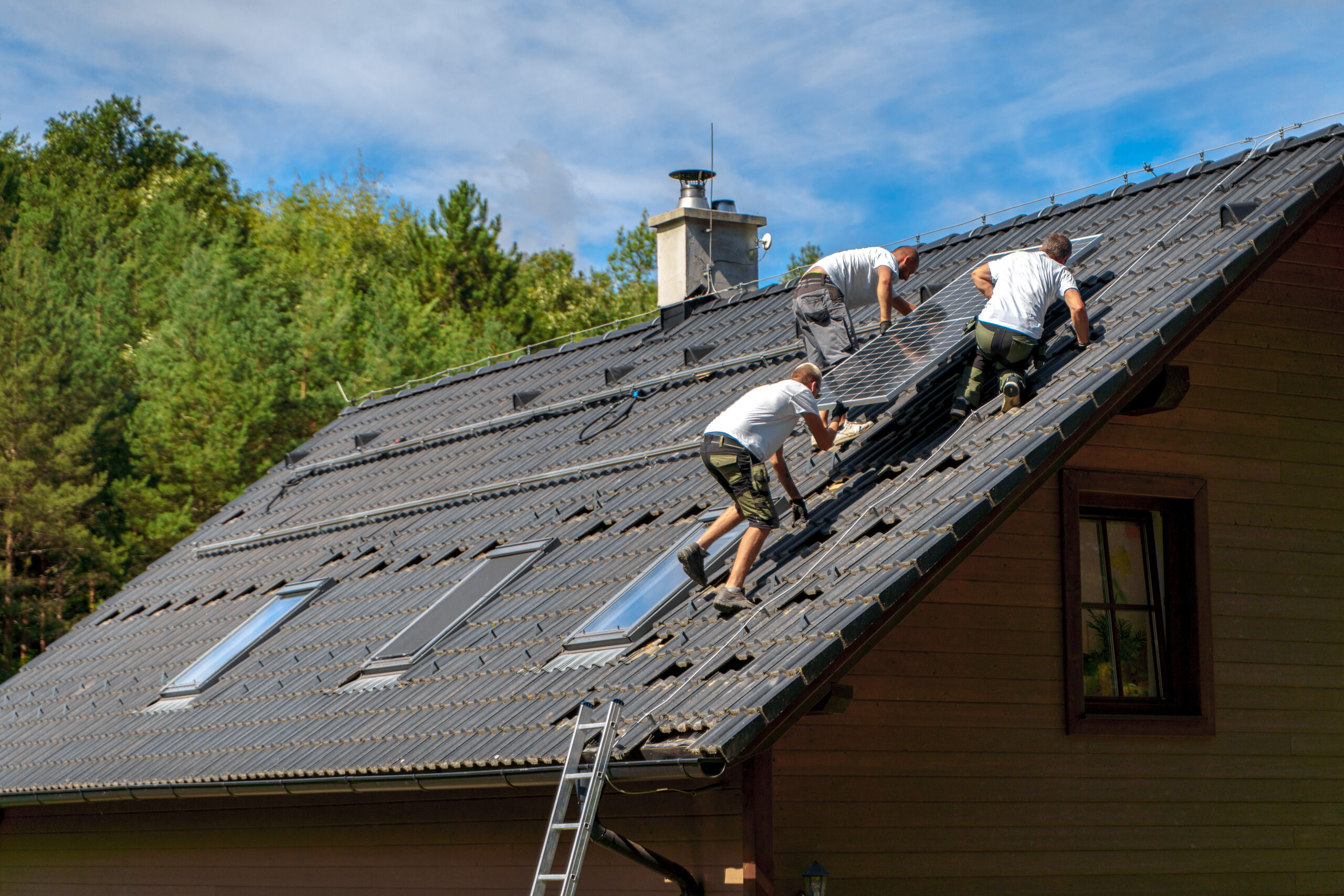
Solar integration planning during roof replacement is becoming more common among forward-thinking contractors. Roof replacements that incorporate reinforced attachment points, electrical conduit pathways, and structural assessment for future solar panel loads eliminate the need for costly modifications if solar is added after the roof installation is complete.
Trend 7: Roofing Material Selection in Gaithersburg, MD Requires More Research Than Ever
Roofing material selection in Gaithersburg, MD has become a genuinely complex decision requiring more careful analysis than in previous decades. The expansion of available products from traditional asphalt and metal to synthetic slate, composite shake, and polymer tile means homeowners have more options than ever, but also more ways to make a suboptimal choice if they rely on incomplete information.
Here is a practical comparison of the primary roofing materials available to Gaithersburg homeowners in 2026:
| Material | Lifespan | Cost Range (per sq ft installed) | Best For | Key Consideration |
| Architectural Asphalt Shingles | 20–30 years | $4.50 – $7.00 | Budget-conscious replacements | Most widely available; easiest to source contractors |
| Class 4 Impact-Resistant Shingles | 25–35 years | $6.00 – $9.00 | Storm-prone properties | Insurance discount may offset premium |
| Standing Seam Metal | 40–70 years | $12.00 – $18.00 | Long-term owners, energy efficiency | Higher upfront; lowest lifecycle cost |
| Metal Shingle / Shake Profile | 35–50 years | $9.00 – $14.00 | Traditional appearance + metal durability | Best of both worlds for HOA-sensitive areas |
| Synthetic Slate | 30–50 years | $9.00 – $15.00 | Historic/architectural homes | Lightweight alternative to natural slate |
| Cedar Shake | 20–30 years | $8.00 – $13.00 | Natural aesthetic | Higher maintenance; check local fire codes |
| Composite / Polymer Roofing | 30–50 years | $8.00 – $12.00 | Low maintenance, varied aesthetics | Growing category; vet manufacturer warranties carefully |
The right choice depends on budget, how long the homeowner plans to stay in the property, the architectural style of the home, HOA restrictions if applicable, and local climate performance priorities. A roofing contractor with deep familiarity with the Gaithersburg market can provide guidance that generic online research cannot, including knowledge of which products perform reliably in Montgomery County’s specific weather patterns and which local suppliers stock the materials needed for your project.
Trend 8: Leak Prevention Solutions in Gaithersburg, MD Are Getting More Sophisticated
Leak prevention solutions in Gaithersburg, MD have evolved significantly from the basic approaches that defined roofing installation a generation ago. In 2026, professional roofing installation treats leak prevention as a system-level design challenge rather than a series of individual product applications, and the results are measurably better performance and fewer callbacks.
The most vulnerable leak points on any residential roof are consistent and well-understood: eaves susceptible to ice dam backup, valleys where two roof planes intersect and concentrate water flow, penetrations for plumbing vents, chimneys, skylights, and HVAC equipment, and wall intersections where vertical surfaces meet the roof plane. Each of these areas receives specific waterproofing treatment on a quality installation:
Self-adhering ice and water shield applied a minimum of 24 inches up from the eave edge — and further in climates prone to severe ice damming creates a redundant waterproof membrane at the area most commonly affected by ice dam backup infiltration during Maryland winters.
Valley waterproofing using either self-adhering membrane or properly lapped metal valley flashing ensures that the high-volume water flow in roof valleys is managed without infiltration risk.
Sealed penetration boots and collars at all pipe and vent penetrations use modern flexible materials that maintain a weathertight seal through years of thermal movement — a significant improvement over the rigid lead boots that crack and fail on older installations.
Properly lapped and sealed step flashing at all wall intersections, installed in coordination with siding and trim rather than as an afterthought, creates redundant protection at one of the most leak-prone locations on any residential roof.
Trend 9: Residential Roof Upgrade Projects Are Being Treated as Long-Term Investments
The framing around residential roof upgrade projects has shifted meaningfully in 2026. Homeowners who previously viewed roof replacement as a reactive expense something you did when the roof was leaking or visibly failing are increasingly approaching it as a proactive investment with measurable return on several dimensions simultaneously.
Property value impact — A new roof is consistently ranked among the home improvement projects with the strongest return on investment at resale. In a competitive real estate market like Montgomery County, a recently replaced roof with premium materials and a transferable warranty is a genuine differentiator that buyers recognize and price into their offers.
Insurance implications — Many insurers are now scrutinizing roof age and condition as part of policy underwriting, with some declining to write new policies on homes with roofs beyond a certain age or applying significant premium surcharges. A proactive roof replacement before the existing roof becomes an insurance issue eliminates this risk and may qualify for premium discounts with impact-resistant materials.
Avoiding cascade damage costs — A roof that is allowed to fail rather than being proactively replaced creates risks that extend far beyond the cost of the roof itself. Water infiltration through a failing roof leads to insulation damage, mold growth in attic framing, damage to ceilings and interior finishes, and in severe cases, structural damage to roof framing components. The cost to remediate these secondary damages routinely exceeds the cost of a timely roof replacement by a significant margin.
Roofing Contractors in Gaithersburg, MD: What to Look for in 2026
Working with the right roofing contractor in Gaithersburg, MD is as important as selecting the right materials. The quality of installation determines how well any roofing system performs — and the gap between an expert installation and a substandard one is often invisible at the surface level until the first serious weather event reveals it.
Key factors to evaluate when selecting a roofing contractor in the Gaithersburg area:
Maryland state licensing and insurance — Verify that the contractor holds a valid Maryland Home Improvement Contractor license and carries both general liability insurance and workers’ compensation coverage. Request certificates of insurance directly from the insurer rather than accepting contractor-provided copies.
Manufacturer certification — Leading manufacturers including GAF, Owens Corning, and CertainTeed offer tiered contractor certification programs that require training, volume commitments, and quality standards. Certified contractors have access to enhanced warranty programs that non-certified installers cannot offer.
Local references and portfolio — A contractor with an established presence in the Gaithersburg and Montgomery County market should be able to provide local references from recent projects. Ask specifically for references on projects using the same materials and scope as your planned installation.
Written proposals with full specification detail — A professional roofing proposal should specify the exact products being installed by manufacturer and product name, the warranty coverage being provided, the scope of work including tear-off, underlayment, and ventilation, and payment terms. Vague proposals that list only total price without material specification create disputes and corners that get cut.
Storm chaser awareness — After major weather events, Gaithersburg homeowners are often approached by out-of-area contractors soliciting storm damage work. These operations frequently disappear after collecting deposits, install substandard materials, or perform work that fails to meet Maryland building codes. Work exclusively with established local contractors with a verifiable history in the market.
Conclusion
The roofing decisions Gaithersburg homeowners make in 2026 will determine how their homes perform through weather events, energy cost increases, and property value fluctuations for the next two to three decades. The trends shaping the industry this year energy efficiency, impact resistance, smart technology integration, and proactive replacement planning are not fads. They reflect a fundamental shift in how homeowners and roofing professionals think about what a roof should do and how long it should last.
Investing in quality materials, professional installation, and a contractor who understands both the technology and the local market is not an extravagance; it is the most cost-effective approach to residential roofing when the full lifecycle is taken into account. The roof that costs slightly more to install correctly almost always costs significantly less to own over its full service life.
FAQs
1. How much does a new roof cost in Gaithersburg, MD in 2026?
Roof replacement costs in Gaithersburg typically range based on material, roof size, and complexity. Asphalt shingles remain the most affordable option, while metal roofing and premium systems cost more upfront but offer longer lifespan and better energy efficiency.
2. How long does a roof Installation take in Gaithersburg, MD?
Most residential roof installations in Gaithersburg are completed within 1 to 3 days, depending on weather conditions, roof size, and material type. Larger or more complex roofs may take slightly longer.
3. What are the signs I need a roof installation instead of repairs?
Common signs include frequent leaks, missing or curling shingles, sagging roof sections, excessive granule loss in gutters, and visible water stains inside the home. If damage is widespread, replacement is usually more cost-effective than repeated repairs.
4. What roofing material lasts the longest in Maryland weather?
Metal roofing generally offers the longest lifespan, often lasting 40–70 years, followed by high-quality architectural shingles and synthetic roofing materials. Maryland’s mix of heat, humidity, snow, and storms makes durability an important factor.
5. Do I need a permit for roof replacement in Gaithersburg, MD?
Yes, most roof replacements in Gaithersburg require a building permit to ensure compliance with Montgomery County building codes. Licensed roofing contractors typically handle the permit process on behalf of homeowners.